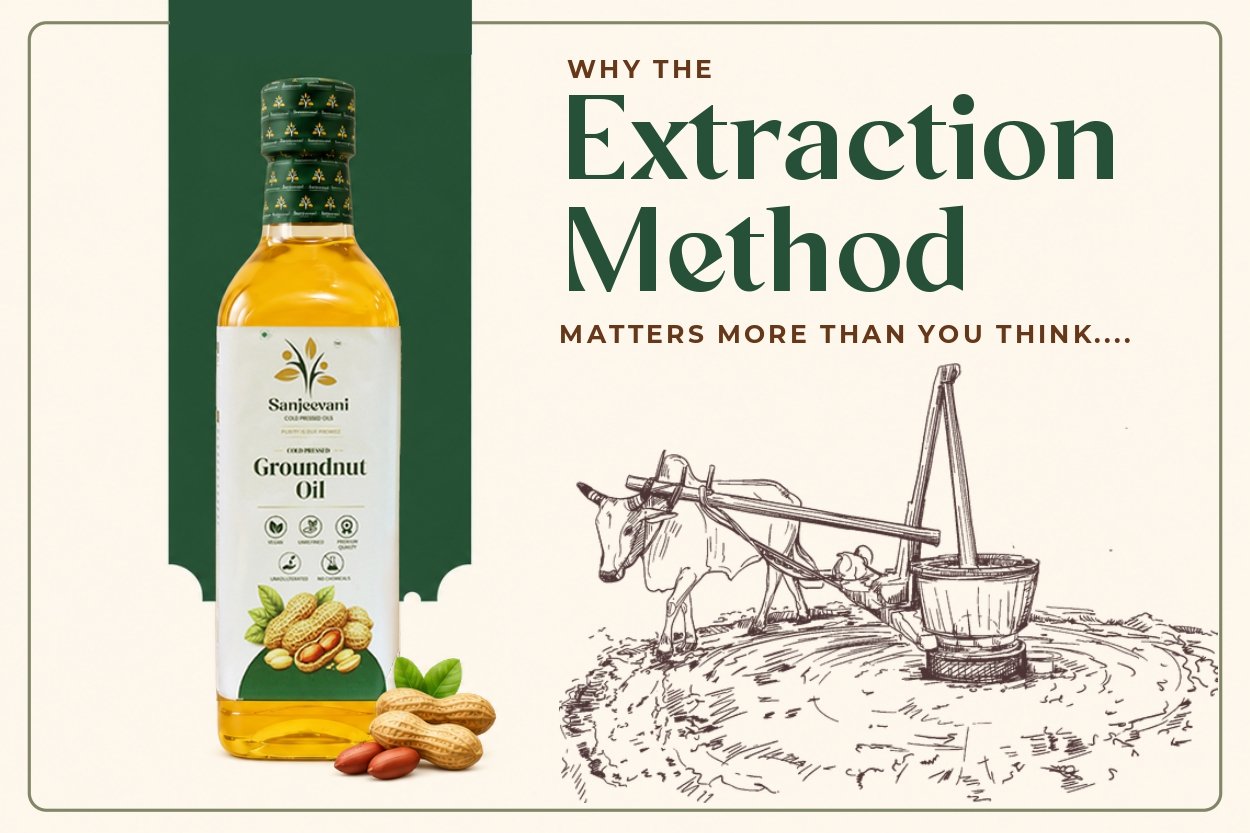
Walk down any cooking oil aisle and the bottles look similar: golden, clear, neatly labelled. But two oils made from the same seed can be completely different in aroma, taste and nutrition. The reason is not the seed. It is the extraction method.
At Sanjeevani Cold Pressed Oils, this is the first thing we want every customer to understand, because once you know how oil is made, choosing it becomes much easier.
The Three Common Ways Oil Is Extracted
1. Solvent extraction
Most mass-market oils begin here. Seeds are crushed and washed with a chemical solvent, usually hexane, to pull out as much oil as possible. It is fast and cheap, and it gives the highest yield. The solvent is later removed, but the oil is still raw, dark and strong-smelling, so it needs further processing.
2. High-heat pressing
Some oils are pressed mechanically, but at high temperatures created by friction or by pre-heating the seeds. Heat helps the oil flow more easily, but it also damages the delicate natural compounds in the seed.
3. Cold pressing
The seeds are pressed slowly at low temperatures, with no chemical solvents and no added heat. The oil that flows out is simply filtered and bottled. It is the oldest method of making oil, and the closest to how our grandparents did it with the traditional ghani.
What Happens After Extraction (And Why It Matters)
Solvent-extracted and high-heat oils usually go through a refining process to make them look and smell neutral. This typically includes:
- Degumming to remove natural gums
- Neutralising with alkali to reduce acidity
- Bleaching to lighten the colour
- Deodorising at very high temperatures to strip away smell
Each step makes the oil look cleaner and last longer on the shelf. But each step also removes something: natural antioxidants, vitamin E, plant compounds and the flavour that makes an oil taste like what it came from.
A cold-pressed oil skips all of this. What you get is the oil as the seed intended it to be.
Cold-Pressed Oil Benefits: What You Actually Gain
1. Natural nutrients stay intact. Because the oil is never exposed to harsh heat or chemicals, more of the seed's natural vitamin E and antioxidants are retained.
2. Real flavour and aroma. Cold-pressed groundnut oil smells like roasted groundnuts. Cold-pressed sesame oil has a warm, nutty depth. Coconut oil tastes of fresh coconut. Your sabzi, dal, tadka and pickles taste noticeably better.
3. No chemical residue to worry about. No solvents, no bleaching agents, no deodorising chemicals. Fewer steps means a simpler, more honest product.
4. Suited to traditional Indian cooking. Indian kitchens have used pressed oils like groundnut, sesame, mustard and coconut for generations, for everyday cooking, frying and seasoning.
"But Isn't Refined Oil Better for High-Heat Cooking?"
This is a common question. Refined oils are often marketed as the only option for frying, but that is not the whole story. Oils like groundnut and mustard have traditionally been used in Indian deep frying and tempering for centuries. The key is to avoid overheating any oil and to never reuse it repeatedly. Choose the right oil for the dish, and cold-pressed oils work beautifully in everyday home cooking.
How Sanjeevani Does It Differently
Our promise is simple: we keep the process as close to nature as possible.
- Seeds are pressed slowly at low temperatures
- No chemical solvents, no bleaching, no deodorising
- Oil is filtered, not stripped
- What is in the bottle is what came out of the seed
You may notice a stronger aroma or a little natural sediment in a cold-pressed oil. That is not a flaw. It is a sign the oil has not been over-processed.
Frequently Asked Questions
What does "cold-pressed" actually mean?
It means the oil is pressed out of seeds at low temperatures, without chemical solvents or added heat. The oil is filtered and bottled, not refined.
Is cold-pressed oil healthier than refined oil?
Cold-pressed oil keeps more of the seed's natural nutrients, such as vitamin E and antioxidants, and involves no chemical processing. Any oil should still be used in moderation as part of a balanced diet.
Can I use cold-pressed oil for frying and daily cooking?
Yes. Oils like groundnut, sesame and mustard have been used in Indian kitchens for generations. Avoid overheating the oil and don't reuse it again and again.
Why does my cold-pressed oil smell stronger or have sediment?
The strong aroma comes from the seed itself, and the sediment is natural plant matter that hasn't been stripped away. Both are signs the oil is minimally processed.
How should I store cold-pressed oil?
Keep it in a cool, dark place, away from the stove, with the cap tightly closed. Use it within the shelf life mentioned on the label.
Sanjeevani oils are pressed slowly at low temperatures with no chemical solvents, bleaching or deodorising. What you pour from the bottle is the oil as it came from the seed.
The Bottom Line
Oil is something you eat every single day, often two or three times a day. How it is extracted is not a small detail. It decides what is in your food, how it tastes and how much of the seed's goodness reaches your plate.
Ready to taste the difference? Explore the Sanjeevani Cold Pressed Oils range and bring the traditional way of pressing back into your kitchen.
Disclaimer: This article is for general information and is not medical advice. Please consult a doctor or nutritionist for dietary guidance specific to your health.