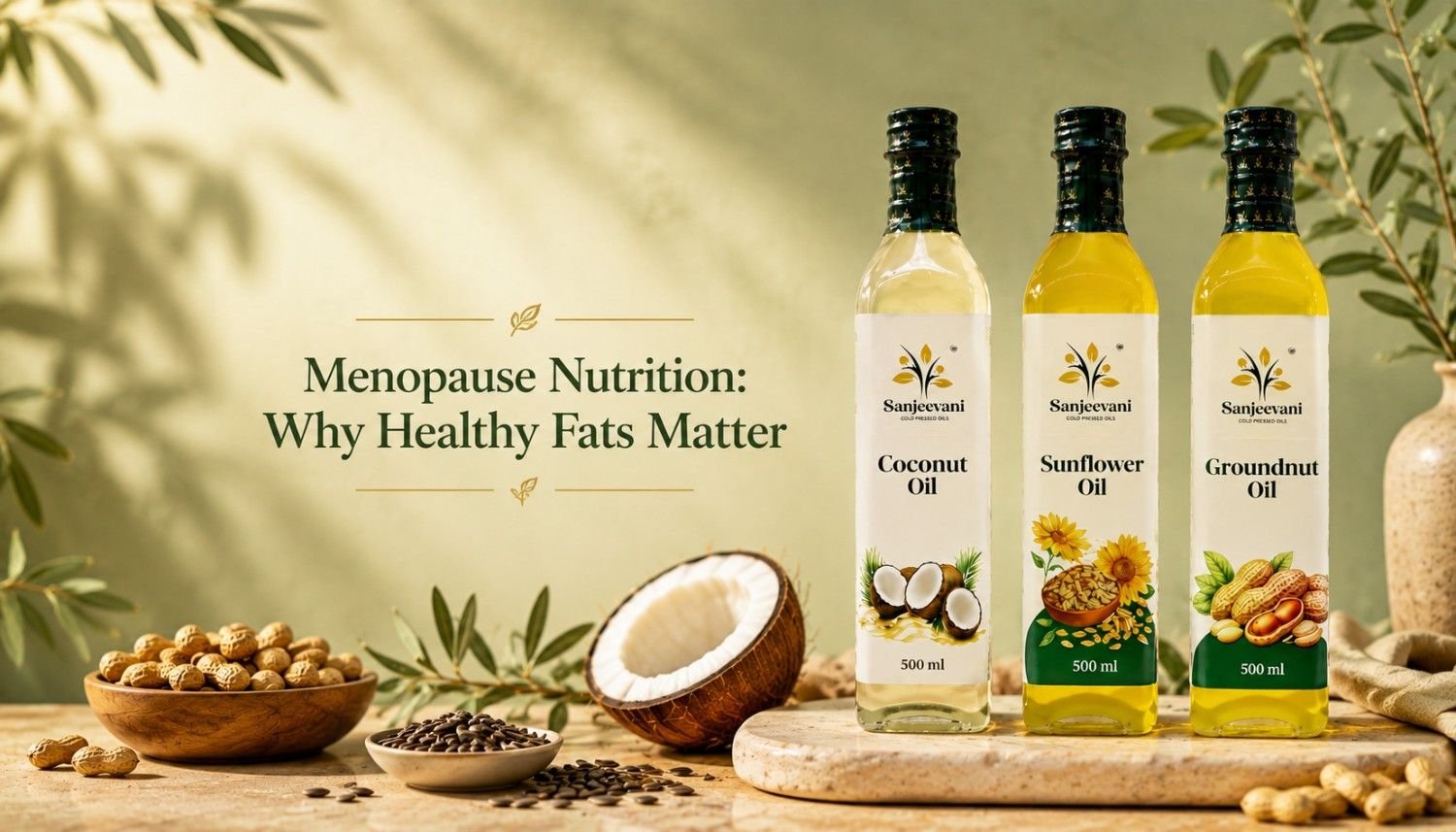
Menopause is a natural phase of life, but the changes it brings can often feel overwhelming. From hot flashes and mood swings to poor sleep, weight gain, and joint discomfort, your body’s nutritional needs change during this stage. One nutrient that deserves special attention is healthy fat.
Why Healthy Fats Matter During Menopause
Including healthy fats in your daily diet can help:
- Support overall hormonal health.
- Promote heart health as cardiovascular risk increases after menopause.
- Support brain function and mood.
- Help absorb vitamins A, D, E, and K.
- Reduce inflammation and support joint health.
- Keep you fuller for longer, making weight management easier.
Where Can You Get Healthy Fats?
Healthy fats come from a variety of everyday foods, including:
- Fatty fish like salmon, sardines, and mackerel.
- Nuts such as almonds and walnuts.
- Seeds like flaxseeds, chia seeds, sunflower seeds, and pumpkin seeds.
- Avocados and olives.
- Eggs and lean poultry as part of a balanced diet.
- Good-quality cold-pressed oils, which make healthy fats a part of your everyday cooking.
Your Cooking Oil Matters More Than You Think
Your cooking oil is one of the few ingredients you use every single day, yet it’s often overlooked. Choosing a good-quality cold-pressed oil is a simple way to include healthy fats in your meals. Since these oils are extracted without excessive heat, they retain more of their naturally occurring nutrients and beneficial plant compounds than heavily refined oils.
Don’t Stick to Just One Oil
Just as eating a variety of fruits and vegetables helps diversify your nutrient intake, rotating different cold-pressed seed and nut oils can do the same.
- Groundnut Oil: Rich in heart-friendly monounsaturated fats.
- Sesame Oil: Naturally contains antioxidants like sesamol.
- Sunflower Oil: A source of vitamin E.
- Mustard Oil: Offers a balance of omega-3 and omega-6 fatty acids.
- Flaxseed Oil: Rich in plant-based omega-3s (ALA).
- Walnut Oil: Supports heart and brain health with healthy fats.
- Almond Oil: Naturally rich in vitamin E and monounsaturated fats.
Using different oils for different meals is a simple way to enjoy a wider range of naturally occurring nutrients.
The Bottom Line
Menopause nutrition isn’t about following a restrictive diet, it’s about making mindful, everyday choices. A balanced diet rich in whole foods, healthy fats, regular exercise, and quality sleep can help support your body through this transition. Sometimes, better health starts with the simplest habit: choosing wholesome ingredients for the meals you cook every day.
Frequently Asked Questions (FAQs)
Healthy fats from fatty fish, nuts, seeds, avocados, and good-quality cold-pressed oils can support overall health during menopause.
Choosing a minimally processed, cold-pressed cooking oil can be one simple way to include healthy fats in your everyday diet as part of a balanced lifestyle.
There isn’t one “best” oil. Rotating different cold-pressed oils like groundnut, sesame, mustard, sunflower, flaxseed, and walnut oils can help provide a wider variety of nutrients.
Hormonal changes can slow metabolism and affect how your body stores fat. Eating balanced meals with healthy fats, protein, and fibre may help you stay fuller for longer and support healthy weight management.
No. Your body needs healthy fats to support hormone function, heart health, brain health, and the absorption of essential vitamins. The key is choosing quality sources of fat over highly processed ones.